



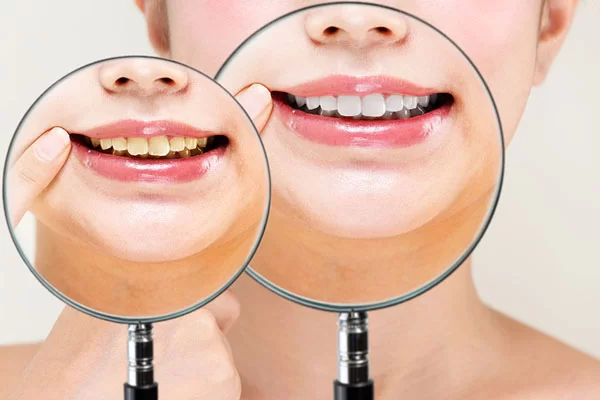
1 in 5 Americans Have Whitened Their Teeth Professionally—Should You Be Next?
The Rising Popularity of Professional Whitening
A quick look around any grocery store, gym, or coffee shop in Hilliard will tell you the same thing the data does: more people are investing in their smiles than ever before. According to a YouGov survey, 19% of Americans have undergone professional teeth whitening, making it the single most popular cosmetic dental procedure in the country. That’s roughly one in every five people you pass on the street—coworkers, neighbors, maybe even your carpool buddy.
If you’ve been putting off whitening your teeth because you weren’t sure it was “worth it,” the numbers say otherwise. Here’s what’s driving that 19%, who’s doing it, and how to know if you should join them.
Have questions about ZOOM! Teeth whitening? Call Fishinger Dental at (614) 771-6060 to schedule your consultation with our Hilliard cosmetic dentist.
Why Professional Whitening Has Become So Popular
Teeth whitening didn’t become the top cosmetic dental procedure by accident. A combination of social pressure, accessibility, and better technology has pushed more people toward brighter smiles than at any point in recent history.
Social media plays a bigger role than most people realize. Photos and videos are now a daily part of life, and a stained or dull smile is one of the first things people notice about themselves in a picture. That visibility has normalized whitening as routine self-care rather than a special-occasion splurge—closer to a haircut or a manicure than a major cosmetic procedure.
At the same time, professional whitening has become faster and more convenient. What used to require weeks of at-home trays can now be done in a single visit. That shift in convenience is a big part of why adoption has climbed the way it has.
Who’s Actually Getting Their Teeth Whitened?
The data shows a clear pattern: younger adults are leading the trend. People under 45 are roughly twice as likely to get professional teeth whitening as those over 45, and a separate YouGov survey found that 26% of adults under 45 have had their teeth whitened, compared to just 14% of adults over 45.
That doesn’t mean whitening is only for younger patients—Dr. Nathan Desai treats adults across every age range at Fishinger Dental, and plenty of longtime patients decide it’s finally time for a brighter smile after years of coffee, tea, or wine staining. But if you’ve noticed more people your kids’ age or in their 20s and 30s talking about whitening, the data backs up what you’re seeing.
What “Professional Whitening” Actually Means
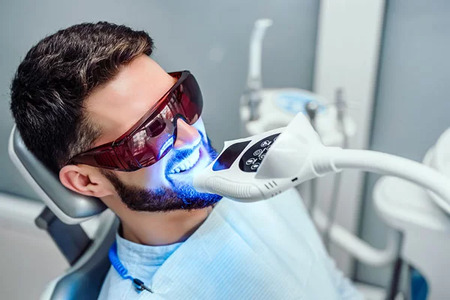
Not all whitening is created equal, and the 19% figure specifically refers to professional treatment—not whitening toothpaste or drugstore strips. Professional, in-office whitening like Philips Zoom! uses a clinical-strength, hydrogen peroxide-based gel activated by an LED light, applied by a dental professional who protects your gums and soft tissue first.
That’s a meaningfully different experience than an at-home kit. At-home options use lower concentrations of peroxide spread out over weeks, with generic trays that don’t seal well against the gumline. In-office treatment delivers dramatic results in about an hour, with a professional monitoring the process the entire time.
At Fishinger Dental, most patients see their teeth lighten by up to eight shades in three 15-minute treatment rounds, with the full appointment, start to finish, running about 45 to 60 minutes. Many patients book it over a lunch break.
Should You Be Part of the 19%?
Whitening tends to work best for patients who:
- Have surface stains from coffee, tea, red wine, or smoking
- Have mild to moderate discoloration from aging or certain medications
- Are in good oral health, with no untreated cavities or gum disease
- Have realistic expectations about how much brighter their smile will get
If that sounds like you, professional whitening is worth a conversation. And if it turns out you’re not an ideal candidate — for example, if you have visible dental crowns, porcelain veneers, or tooth-colored fillings on your front teeth, which won’t whiten the same way as natural enamel — Dr. Desai can walk you through alternatives like cosmetic bonding or porcelain veneers instead of just handing you a treatment you don’t actually need.
What to Expect at Your Zoom! Whitening Visit
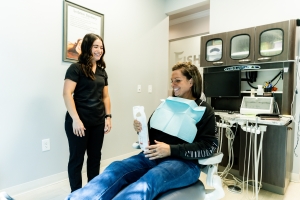
Fishinger Dental’s process starts with a pre-treatment consultation, where Dr. Desai examines your oral health to confirm you’re a good candidate and addresses any cavities or gum issues first—whitening over untreated problems can cause unnecessary sensitivity, so this step matters.
From there, your lips, gums, and soft tissue are protected, the whitening gel is applied, and the LED light activates it in a few 15-minute rounds. You’ll likely feel a mild warming sensation, and Dr. Desai checks your comfort and progress throughout. The gel itself contains potassium nitrate and fluoride, which are built-in desensitizing agents designed to help minimize discomfort.
Afterward, you’ll get clear aftercare instructions: stick to a “white diet” for 48 hours (skip coffee, red wine, tomato sauce, and berries), use a whitening-friendly toothpaste, and keep up with regular cleanings and checkups. Skipping that aftercare window is the most common reason results fade faster than patients expect.
A Brighter Smile, Backed by an Hour in the Chair
Joining the 19% of Americans who’ve whitened their teeth professionally doesn’t require weeks of trays or guesswork about whether it’s working. With Zoom! Whitening at Fishinger Dental, you can walk in during a lunch break and walk out with a noticeably brighter smile—backed by a dentist who checks your oral health first, not just your shade guide.
Ready to Join the 1 in 5? Book Your Zoom! Whitening Consultation in Hilliard Today
Dr. Nathan Desai and the team at Fishinger Dental are ready to help you find out if Zoom! Whitening is right for you. Call our Hilliard, OH, dental office at (614) 771-6060 to schedule your consultation. We’re located at 3560 Fishinger Blvd, Hilliard, OH 43026, and we welcome patients from Hilliard, Columbus, Dublin, Upper Arlington, Grove City, and Westerville, OH.