


Understanding the Types of Teeth Stains (and What’s Really Causing Yours)
If your smile has gone from bright to dull, you’re not imagining it, and you’re not alone. Tens of millions of Americans buy some kind of whitening product every year, yet not every stain responds to the same treatment. The type of teeth stains you’re dealing with—extrinsic, intrinsic, or age-related—determines whether an over-the-counter strip will actually work or whether you need professional teeth whitening (or a more permanent fix, like porcelain veneers) to see real results.
At Fishinger Dental, a dental office serving Hilliard, OH, and the surrounding communities, we walk every patient through exactly what’s staining their teeth before recommending a treatment, so you’re not guessing or wasting money on the wrong product. If you’re ready to brighten your smile, contact your cosmetic dentist in Hilliard, Dr. Nathan Desai, by calling (614) 771-6060.
What Are the 3 Types of Teeth Stains?
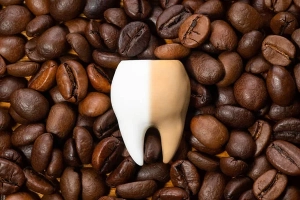
Dentists generally sort tooth discoloration into three categories:
- Extrinsic Stains: Sit on the outer enamel and come from what you eat, drink, or smoke.
- Intrinsic Stains: Develop inside the tooth structure and are harder to remove with whitening alone.
- Age-Related Stains: A mix of both, caused by decades of enamel wear and thinning.
Here’s what causes each one and which treatments actually work.
Extrinsic Teeth Stains: Surface-Level Discoloration
Extrinsic stains are the most common type and the easiest to treat because they sit on top of the enamel rather than inside it. Common causes include:
- Smoking or using tobacco
- Coffee, tea, and red wine
- Pigmented foods like berries, soy sauce, and tomato-based sauces
- Inconsistent brushing, which lets surface stains build up over time
How Extrinsic Stains Are Treated
Because these stains haven’t penetrated the tooth, professional teeth whitening is highly effective. In-office whitening uses a higher concentration of hydrogen peroxide than anything available over the counter, often paired with a curing light to speed up the reaction—most patients see a noticeable change in a single visit. If you’d rather whiten gradually at your own pace, a custom at-home whitening kit uses a gentler carbamide peroxide gel in a tray molded to your teeth.
Intrinsic Teeth Stains: Discoloration Beneath the Enamel
Intrinsic stains form inside the tooth, which is why they don’t respond to surface polishing or whitening toothpaste. Typical causes include:
- Genetics
- Certain medications (tetracycline is the classic example)
- Dental trauma
- Excessive fluoride exposure during childhood tooth development (fluorosis)
How Intrinsic Stains Are Treated
Because the discoloration is internal, in-office whitening or custom take-home trays are still worth trying first for many patients. When whitening alone can’t lighten the tooth enough, porcelain veneers or dental bonding cover the stain permanently, and microabrasion can gently resurface enamel for milder cases. It’s worth knowing that veneers, dental crowns, and dental implants don’t discolor the way natural enamel does, so for a tooth that’s severely stained from old trauma or a past root canal, a restoration is often the more predictable long-term fix.
Our Hilliard dental team will look at your specific case and recommend the option that gives you the best result without over-treating a tooth that would respond fine to whitening.
Age-Related Teeth Stains: Why Teeth Darken Over Time
As we age, enamel thins naturally, letting the yellowish dentin underneath show through more. Thinner enamel is also more porous, so teeth pick up stains from food and drinks faster than they did in your twenties.
How Age-Related Stains Are Treated
Professional whitening, whether in-office or through custom trays, is effective for most age-related discoloration. In more advanced cases, where enamel has worn thin enough that whitening won’t restore a bright appearance, veneers or bonding can rebuild a more youthful-looking smile.
What Stain Color Can Tell You
Stain color is often a quick clue to what’s actually going on:
| Color | Likely Cause | Usually |
| Brown | Tobacco, coffee/tea, tartar buildup | Extrinsic |
| Yellow | Enamel thinning, frequent staining drinks | Extrinsic/age-related |
| White spots or streaks | Fluorosis or early enamel mineral loss | Intrinsic |
| Gray or dark (single tooth) | Old trauma, a dying nerve, tetracycline exposure, or aging amalgam fillings | Intrinsic |
One note worth flagging: a single tooth that suddenly turns gray or dark, especially without the rest of your teeth changing, can signal internal damage rather than a cosmetic stain. That’s a reason to see a dentist before trying to whiten it at home.
Do Home Remedies Like Baking Soda or Coconut Oil Actually Work?
Both come up a lot in online searches, so it’s worth answering honestly.
- Baking soda is a mild abrasive that can help buff away light surface stains, but scrubbing with it too often or too hard can wear down enamel over time, which makes teeth look more yellow, not less.
- Coconut oil pulling hasn’t shown strong clinical evidence for actually whitening teeth; at best, it may support general oral health as part of a hygiene routine, not as a stand-in for whitening.
If you want a safe daily option, an ADA-accepted whitening toothpaste is a better bet than either, and for real results on stubborn stains, professional treatment still outperforms both by a wide margin.
The Best Whitening Treatment for Each Type of Stain
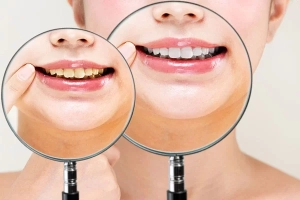
- In-Office Professional Whitening: A high-concentration hydrogen peroxide gel, applied and monitored by your dentist, for the fastest results on extrinsic stains and many intrinsic cases. Ask about our Zoom! teeth whitening option.
- Custom At-Home Whitening Kits: Carbamide peroxide in a tray made for your teeth, for gradual whitening on your own schedule.
- Porcelain Veneers: A permanent, stain-resistant cover for teeth that whitening can’t fully correct.
- Dental Bonding: Tooth-colored resin that covers moderate intrinsic stains and minor chips in a single visit.
- Microabrasion: A conservative option for mild, isolated surface discoloration like early fluorosis spots.
Frequently Asked Questions
Can teeth stains be prevented?
Yes. Brushing twice a day, flossing daily, and rinsing with water after coffee, tea, or red wine all reduce staining. Regular dental cleanings remove buildup before it sets in.
What’s the difference between hydrogen peroxide and carbamide peroxide whitening?
Both are bleaching agents, but hydrogen peroxide works faster at a higher strength and is typically used for in-office treatments, while carbamide peroxide breaks down more slowly and is better suited to take-home trays used over one to two weeks.
Do over-the-counter whitening products work?
Whitening strips and toothpaste can help with mild extrinsic stains, but they’re weaker than professional-grade treatments and take longer to show results. For visible, lasting change, professional teeth whitening from a dental office will outperform anything sold in a drugstore.
Can everyone undergo teeth whitening treatment?
Not necessarily. Patients with gum disease, untreated tooth decay, or significant tooth sensitivity may need those issues addressed first. A quick consultation with your dentist will confirm whether you’re a good candidate.
Where can I find a dentist near me for teeth whitening in Hilliard, OH?
Fishinger Dental is located at 3560 Fishinger Blvd in Hilliard and welcomes patients from Columbus, Dublin, Upper Arlington, Grove City, Westerville, and the surrounding areas for professional whitening and cosmetic dentistry.
How much does professional teeth whitening cost near Hilliard, OH?
Cost depends on the type of stain, the treatment method, and whether any prep work is needed first. The most accurate way to get a number is a quick consultation with our team, who can walk you through pricing for your specific case.
Achieve a Brighter Smile at Fishinger Dental in Hilliard, OH
Ready to find out what’s really behind your stains? Call our Hilliard dental office at (614) 771-6060 to schedule a consultation. Whether you’re searching for a dentist near you in Hilliard, Columbus, Dublin, Upper Arlington, Grove City, or Westerville, our team will identify your stain type and recommend the treatment that will actually work for it. Our office is located at 3560 Fishinger Blvd, Hilliard, OH 43026.